
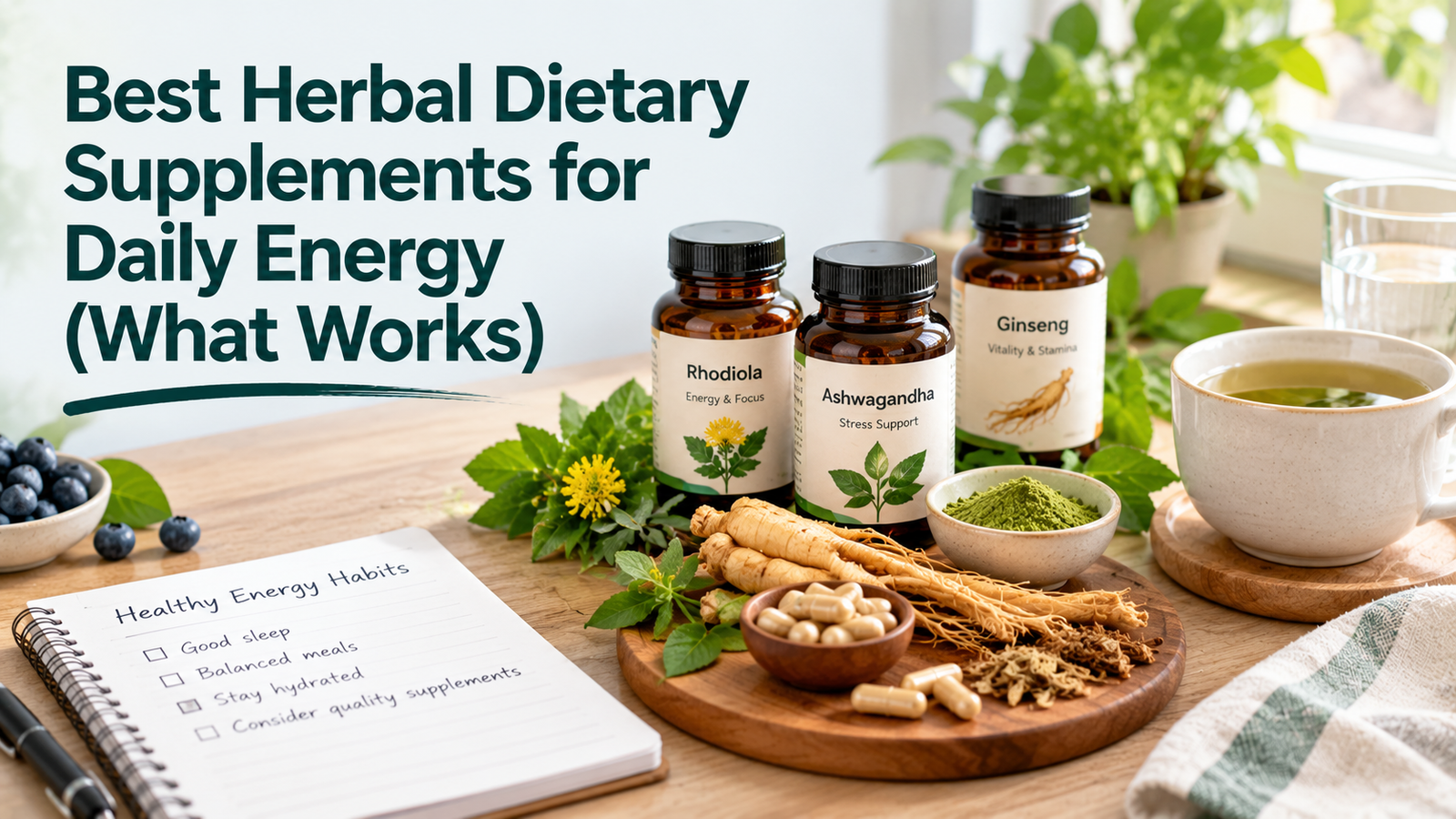
Nobody wants to hear the truth, but sleep beats any herb. Five hours a night plus three coffees is a problem a capsule can’t solve, and a label that promises otherwise is just selling.
Still, a handful of herbs do have actual research behind them, and a handful don’t. I went through what’s out there on the best herbal dietary supplements for daily energy, so here’s what held up and what didn’t.
Before you spend anything
Many ordinary things make you tired. Bad sleep. Low iron.Low B12. An underactive thyroid, sleep apnea, and depression. A vitamin can cover all that up until the problem is actually fixed.If you’ve felt low for weeks, get your blood checked first. It’s cheap, and it beats months of guessing.
Rhodiola
Of all the herbs I could pick on this list, it would definitely be Rhodiola, (Rhodiola rosea), as this was acknowledged by the European Medicines Agency in 2011 to treat temporary stress, fatigue, and exhaustion.A number of small trials point the same direction.
But the trials have problems. Reviews keep flagging design flaws, and NIH’s NCCIH has said the evidence isn’t strong enough to say whether it works for any condition. And then there’s the bottle itself. Some lab analyses found products with barely any real rhodiola inside, which is its own kind of disappointing.It can feel a little stimulating, so a morning dose is the usual advice.
Asian ginseng
Two thousand years of use, and the science is still a mess. A 2023 review of 19 studies and 2,413 people, summarized by NCCIH, found Asian ginseng alone might help general fatigue a little. Other research doesn’t agree, and some medical references are plainly unimpressed.
The most common side effect is insomnia, which is another reason to take it early in the day. It may also lower blood sugar and interact with medications. American ginseng is usually the milder cousin.
Ashwagandha
You’ll see this on a lot of energy lists, though it works differently. The research is mostly about stress and sleep. If it lifts your energy at all, it’s likely because you’re less wound up and you rest better, not because it wakes you up.
It also carries the most serious warnings here. NCCIH says it may be safe in the short term, roughly up to 3 months, and that long-term safety is unknown. Rare cases of liver injury have been reported, and it’s not recommended during pregnancy or breastfeeding. According to NIH’s LiverTox database, the injury tends to show up 2 to 12 weeks after someone starts, and people with cirrhosis or advanced liver disease should stay away. Denmark has announced a ban after a risk assessment couldn’t find a safe lower limit.Yellow skin or eyes, dark urine, itching, unusual exhaustion? Stop and call a doctor.
Green tea and matcha
Dull answer, probably the best one. Green tea has caffeine, typically less per cup than coffee, plus L-theanine, which many people say smooths out the jitters. Drink it as tea.Concentrated green tea extract in capsules is another matter. High doses have been tied to liver trouble, so I’d stick with the cup.
Maca and cordyceps
They’re in every energy blend you’ll see. The research behind them is small or early. Call it a “maybe.” If you enjoy them, go ahead, but don’t expect much, and don’t pay a premium for the name.
Buying one that’s decent
However, FDA does not pre-approve these supplements before they are available in the market. Thus, quality control of these supplements is your responsibility. There are certain steps to follow.To start, it is important that the product displays either the USP or NSF seal. Also, the label should contain the wide species names of herbs, for example, Panax ginseng or Rhodiola rosea, and the process of extraction should also be included. Avoid proprietary blends because they don’t disclose the contents of the herbal supplements. Stick to dosages or follow the recommendations of your physician. Finally, make sure you test one herb and not all of them at once since in case something goes wrong with you, you would never know which herb caused the problem.
Who should ask first?
Are you currently pregnant, nursing, or struggling with liver issues, thyroid disorder, diabetes, heart irregularities, or anxiety? Are you taking any blood thinners, or other medications? Talk to your physician or pharmacist if any of these applies to you. Before the procedure, make sure to have a discussion with your physician.And herbal supplements aren’t made for kids.
Conclusion
Herb Best for Evidence Watch for Rhodiola. Tiredness due to stress Positive, restricted Effect is not consistent; sometimes stimulating Asian ginseng. Fatigue in general Low level, inconsistent Small risk of liver damage; do not use in pregnancy.Green tea: Gentle daily lift Reasonable for tea Caffeine, high-dose extracts Maca, cordyceps Mostly marketing so far, thin overpaying
More research-based guides to herbs and supplements live at Herbal Stack Pro.
FAQ
What is the best herbal supplement for daily energy?
No single winner. There is reliable information that rhodiola is effective against fatigue due to stress, that usage of green tea is most suitable for daily habit, and that ginseng has some limited influence.
Are herbal energy supplements safe to take every day?
Most herbal medications work well for a healthy person in the short term.Long-term safety isn’t well studied for several of them, and ashwagandha is usually advised for about 3 months or less. Ask your doctor.
How long do they take to work?
Some people notice something in days; others need a few weeks. Nothing after about a month? It’s probably not for you.
Can I take herbal supplements with coffee?
Yes, but the combination of caffeine, ginseng, and rhodiola can make a person feel anxious or restless. Take one at a time.
Can supplements replace sleep in such a case?
They cannot. First, look at the sleep, food, and health of a person. Only after it one may think about capsules.