
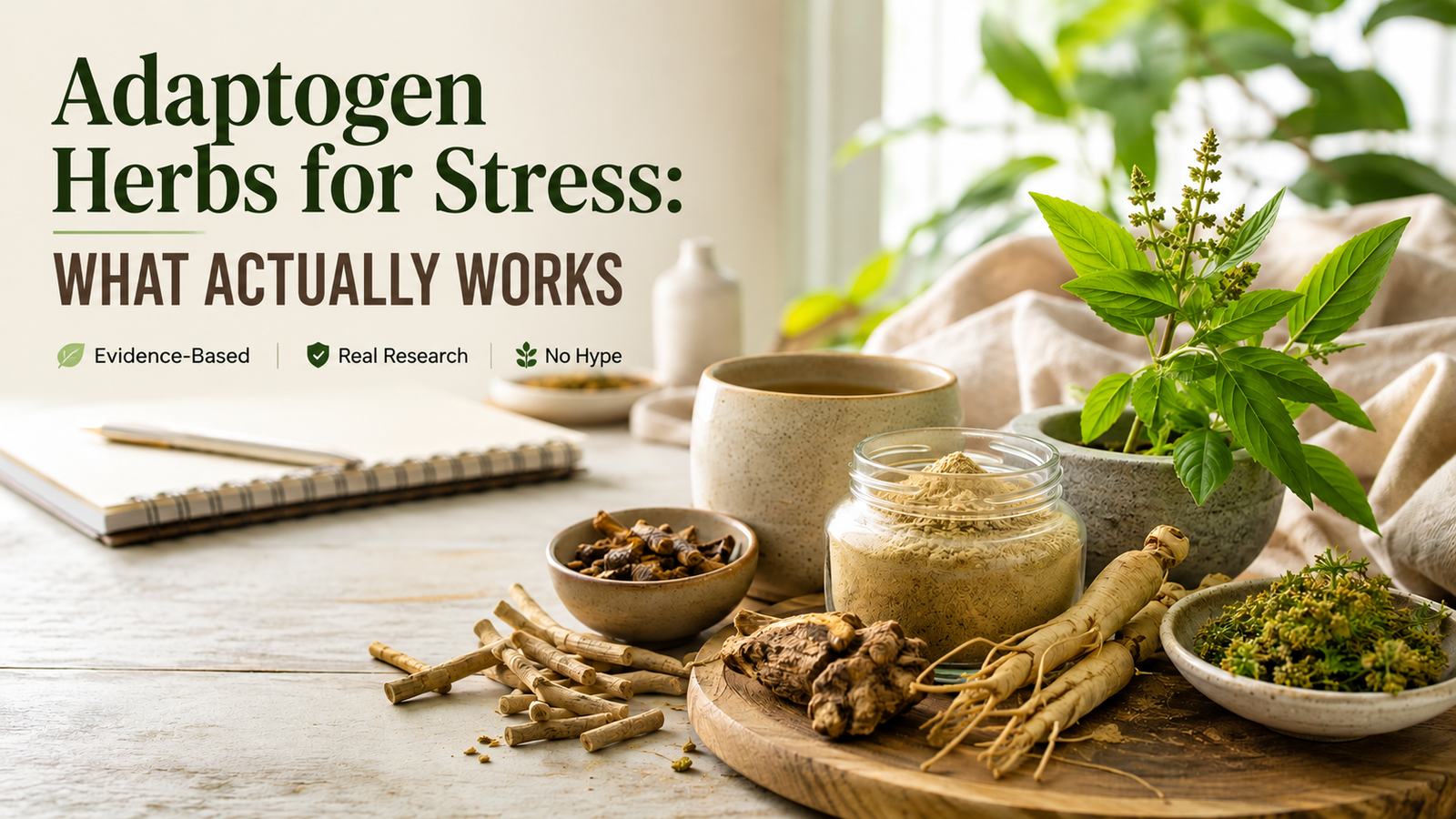
Two years ago, my colleague gave me a jar of green powder that she said would solve my problem of stress forever. Costing twenty dollars per jar, I added a spoonful of it to my daily smoothies for three weeks, but I can’t even tell if it worked.Except make my smoothies taste like a compost bin. Not a great selling point.
That kind of mixed result is pretty common with adaptogen herbs for stress. Once you look past the marketing, there’s a real reason why.
What These Things Even Are, Skipping the Buzzwords
Adaptogens are herbs, roots, and sometimes mushrooms. According to believers, they can help your body cope with stress, rather than mask individual symptoms. This is not some recent phenomenon promoted by TikTok but research by Russian scientists in the 1940s. Mostly done on athletes and soldiers, it has a more peculiar history than that of any wellness product.
This is how the definition of adaptogens looks when you strip off all marketing: for a plant to be an adaptogen, it should provide stress resistance to the body without causing adverse effects itself. And the plant must be effective regardless of the current stress. The latter part, actually, disqualifies many products with “adaptogen” in the name.
According to the Cleveland Clinic, the only actual adaptogens include ashwagandha, American ginseng, Asian ginseng, and rhodiola.
The Ones With Actual Research, Not Just Vibes
Ashwagandha has the most research behind it, and it’s not close. Several studies show it lowers cortisol you can actually measure. Not just people saying they feel calmer. Real numbers from blood tests.
Rhodiola comes in second. It grows in cold places, mostly Siberia. Studies point more toward easing mental fatigue than pure anxiety. That’s a different job than ashwagandha does, which matters if tiredness is a bigger problem for you than racing thoughts.
Holy basil, also called tulsi, keeps coming up for people whose stress shows up as blood sugar swings on top of everything else. It seems gentler than the other two, from what I’ve read. “Gentler” could mean it works less. Or it could just mean fewer side effects. I honestly can’t say which for sure.Ginseng is really more about physical stamina than stress relief, if we’re being exact. But it still gets grouped into this same category all the time.
How Is This Supposed to Actually Work
Short version, skipping the big science words as much as I can. Your body runs a stress loop involving your brain and adrenal glands. Some people call it the HPA axis if you want the technical name. Adaptogens seem to work directly with that loop, instead of just covering up symptoms.
Now here’s the part almost nobody selling these tells you. Dartmouth Health points out that human studies on most of these herbs are still small and short. Most test healthy volunteers, not exactly the strong, solid research everyone assumes exists. That doesn’t mean they don’t work. It means the science hasn’t caught up to the marketing yet. I’d trust anyone who claims otherwise a little less, not more.
Stacking Ashwagandha and Rhodiola: Does That Actually Make Sense?
People combine these two a lot. Each herb works individually to perform their specific tasks. While Ashwagandha has a calming effect and lowers cortisol, Rhodiola has a stimulating effect and helps to enhance mental focus and alertness.
If you experience anxiety buzzing that doesn’t go away, consider taking ashwagandha as a supplement. If you feel worn out and foggy instead, rhodiola might do more for you. Some people stack both and say they feel calm without the sluggish feeling ashwagandha can bring on its own.
There’s more on how ashwagandha compares to faster options like CBD in our piece comparing adaptogen herbs for stress to quicker fixes, if timing matters most to you.
Side Effects Almost Nobody Brings Up
Being a plant doesn’t automatically make something safe for everyone. Full stop. This aspect requires more consideration that the majority of publications pay for it.
Ashwagandha may affect the thyroid and lower blood sugar levels, which could be troubling in case you are prescribed drugs to treat either of these issues. Similar to many other herbs, this one is a member of the nightshades family, so watch out if you have a history of sensitivity to tomatoes or peppers. Ginseng could have an effect on blood thinners and diabetes drugs, while Rhodiola is less potent in this respect, although it may still sometimes trigger anxiety.
These supplements should not be used during pregnancy and nursing without consulting your doctor first.The same concerns you if you are taking any medications, as interactions happen rather frequently.
Not Every Green Powder Earns the Hype It Gets
Here’s my biggest complaint with this whole category. Firms put “adaptogen” on labels of products which contain very little of the real herb. Alternatively, they pack in six different herbs in doses that won’t have any effect individually.Check the actual milligram amounts. The ingredient list alone won’t tell you much.
Standardized extracts matter more here than in most supplement types. Ashwagandha standardized to a specific withanolide percentage is what actually worked in trials. Plain, unstandardized root powder is much less certain. Honestly, kind of a coin flip.
Our guide to reading supplement labels the right way covers exactly what to check before buying any adaptogen blend, including standardization percentages.
So What Would I Actually Try First?
If you’re just starting out, Ashwagandha has the deepest research pile by far. That’s usually where I’d point someone new to this. Give it six to eight weeks before deciding it’s not working. These aren’t fast like caffeine. Not even close.
That coworker with the green powder still swears by it two years later. But placebo effects are also genuine and shouldn’t be brushed aside. After all, something must make a person better, even if the process hasn’t been entirely explained by science.
The information provided here is general, and should not replace personalized advice from your healthcare professional. If stress affects your life severely, see your doctor. A supplement bottle should come second.
FAQ
Which are the best stress specific adaptogens?
Ashwagandha is the most studied to reduce cortisol. Rhodiola seems to have more research on the subject of mental fatigue.During chronic stress, holy basil is considered to be beneficial for regulating blood sugar.
Is ashwagandha safe with rhodiola?
Yes, many people combine them as they work from different angles, one provides calmness while the other offers a boost in energy.
Does taking adaptogenic herbs involve side effects?
Yes, assessing the possible reaction is needed in case of taking ashwagandha due to the thyroid function impact.
Does science confirm the concept of adaptogens?
Some herbs are supported by the scientific community while others are still unverified. But the research is still fairly limited overall. Most studies are small, short, and done on healthy adults. Not the big, long-term studies people assume already exist.